Who was billed7 artists
In the order the promoter listed them.
- Gilles Peterson
- Ron Trent
- Nickodemus
- next: The Chocolate Factory, Fri 23 OctLovie
- Kassa Overall
- Made Kuti
- Carl Hancock Rux
Set times were not published.
the pairs that have met
19 of the 21 pairings on this bill were first meetings.
- Gilles Peterson and Lovie — 1 shared bill before that night, first on Sun 12 Jan 2025.
- Ron Trent and Lovie — 1 shared bill before that night, first on Sun 16 Jun 2024.
Who they are
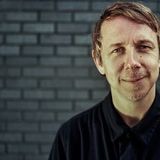
“To many a series of discordant, often obscure and forgotten names but to Gilles Peterson and an ever growing number of radio listeners, clubbers and music lovers, these and many other artists form a rich, vibrant and coherent thread stretching from the primal roots of Africa to the bass culture of Jamaica via the urban soul of Detroit to the intricate stylings of the European new jazz generation.”
their own biography
the whole biography
To many a series of discordant, often obscure and forgotten names but to Gilles Peterson and an ever growing number of radio listeners, clubbers and music lovers, these and many other artists form a rich, vibrant and coherent thread stretching from the primal roots of Africa to the bass culture of Jamaica via the urban soul of Detroit to the intricate stylings of the European new jazz generation. All in all, a truly global musical perspective championed by Gilles for the past 20 years and given voice on his weekly Radio 1 show ‘Worldwide’ and heard around the planet from London to Lagos to Los Angeles. It is this instinctive, personal belief in the uniting power of music that has motivated his vision of an all-embracing musical language that not only cuts across cultural, linguistic and national boundaries but also encompasses them to create new possibilities, new vistas. Indeed, to quote from Lonnie Liston Smith to create ‘a vision of a new world’. So where did this distinct approach find its genesis? What course has led Gilles to this current point? To answer this we need to go back to South London in the late 70’s and early 80’s. Internationally, the period was hallmarked by tension in the Middle East and a new ossification in the Cold War. In the UK, a new Tory government under Margaret Thatcher had been elected, unemployment rocketed and riots scarred many inner cities. Along with the various political & social transitions, music was witnessing a change. Punk had died and the fallout had given birth to New Wave. Electronic sounds increasingly infiltrated the charts and black music, as mercurial as ever, was undergoing change. In reggae, the rockers sound had become more militant, begetting the more strident ‘steppers’ vibe, hip hop & rap was just emerging from across the water and jazz funk was viewed as the favoured choice of a new generation of dancers, twisters and all night party people. And, as ever among new scenes, different camps emerged, each with their own take on a nascent music and culture. Within jazz funk there was the urban, black London crowd represented by magazines like Black Echoes and a more suburban, Essex soul boy vibe, largely represented by the likes of Blues & Soul magazine. Gilles was somewhat caught in the middle. Although brought up amongst the suburban soul scene listening to Level 42 (he was a member of their fan club and ‘Mark King’s biggest fan’), Earth Wind & Fire & Central Line, he would also avidly listen to the pirate radio stations of London, which were heavier, deeper, and blacker. ‘I would listen to a lot of radio, Radio Invicta, the pirate that used to broadcast on a Sunday. I used to spend all my Sundays just trying to tune into Invicta. They were the first ones to do pirate radio and play jazz, funk and soul music. That was all my life revolved about. Doing lists, checking stuff, I was a classic trainspotter.’ This love of radio inspired his first forays into broadcasting. Somewhat removed from the present relative luxury of the BBC, Gilles invested in a small transmitter and turntables. ‘I used to record these shows with my turntables with my next-door neighbour in my garden shed. Before long we were recording an hour each. I convinced my Dad to give us a lift to the nearest high spot. From there we’d connect the transmitter to the tape recorder which would have the two hours of show we had recorded. We’d connect that to a tree with an ariel. We’d sit in a phone box hoping for hours hoping someone would phone.’ The call soon came. However, it was from an unexpected source. Radio Invicta, the very pirate station that Gilles so keenly tuned into had had their transmitter taken away so needed another. Gilles takes up the story, 'They heard there was this young kid in South London who had a transmitter and so I hooked up with them, gave them my transmitter and they offered me a show. They weren’t bringing me on because I was a good DJ - I was just a kid who had a lot of energy and enthusiasm who had a car so they could use me to put ariels up.' Around this time Gilles was frequenting Palladin Records, a record shop run by DJ Paul Murphy. Murphy was a big influence on the young aspiring DJ. Murphy’s reputation and knowledge of rare, killer power jazz tunes was pre-eminent and his club nights at the Electric Ballroom were already legendary. This was, says Gilles ‘the club. It was the ghetto black club; there were very few white boys. In the main room it was Paul Anderson with George Power, jazz, funk, imports and early electro. Upstairs was this little ghetto room. Paul Murphy was in there playing mad fast speed jazz records, really nutty rare fusion Afro-Cuban stuff. The best dancers from downstairs would get to a point where they would have to compete at a higher level so they’d go to the upstairs room. It was very much based around dancing.’ Gilles soon became a well-known face amongst the older dancers and jazz heads. His enthusiasm, passion and burgeoning knowledge made him a natural replacement for Murphy when he left the Ballroom to DJ Friday nights at Soly Sombra. ‘I think half the reason he offered it to me was because he thought I’d fuck it up. There was this little boy turned up with a dodgy wedge. I used to really annoy him. I used to be that irritating guy who irritates me these days. I was just too keen. Put it this way, I was on the pirate radio then and he used to do a chart for me from his shop, Palladin Records, and they’d actually put fake names in there and they’d laugh at me announcing the fake names on the radio. ‘The first couple of weeks was a disaster. I didn’t have the music really. The dancers gave me the first week when Paul Murphy left and I was rubbish. The week after, they went to Soly Sombra but they couldn’t get in. They were really annoyed. Then they all went ‘We’re gonna go back, give this guy a bit of support.’ That was good for me because it really broke me in really well. I appreciate having to work hard’. Once ensconced upstairs in the Electric Ballroom, Gilles understanding and insight into jazz, funk and soul grew exponentially. A hard, almost unforgiving baptism, the Ballroom sessions worked dancers harder and faster. Bass driven, percussion heavy and topped with screaming horns and driving keys, the music Gilles played attracted an increasingly loyal following and his reputation grew. He began playing more venues to more people. The harsh, elitist door policies of many of the Soho clubs where Murphy had gone to play – the Wag particularly – meant many of the racially mixed jazz funk crowd couldn’t follow Murphy. Gilles now became instrumental in an embryonic scene yet to be named. Murphy’s once ardent followers now danced to Peterson’s tune. In particular, the elite of the black London dance crowd IDJ (I Dance Jazz) spun, twisted and leapt to the new DJ’s message. Gilles soon began to play at Nicky Holloway’s Special Branch night at The Royal Oak. ‘His scene that he was building was a cross between the casual soul boy scene, the ones that sang in unison to ‘Joy & Pain’ by Maize, and the London trendy. I’d play upstairs with Chris Bangs and downstairs it was Rampling, Oakenfold, Holloway. That lasted three, four years, a very important weekly club that that scene would all go to, this was pre-Shoom. Out of that scene came nearly everything that we have today in the UK.’ 1985 was something of a watershed for Gilles. It saw him releasing a series of records which were to become the template for compilations to come. The Jazz Juice series collected together many of the jazz tracks Gilles had been playing over the past few years. Drawing on the rich catalogues of Riverside, Prestige, Inner City and other seminal jazz labels, Jazz Juice set the standard for DJ compilations and today are regarded as milestone collections now exchanging hands for serious money. The knowledge displayed by Gilles in compiling these albums brought him to the attention of EMI Records. Witnessing the increased popularity of jazz dance in the UK club scene they called upon Gilles to dig into the vaults of arguably the finest jazz label of them all, Blue Note, and put together a series of inspired collections showcasing the labels best artists - Duke Pearson, Horace Parlan, Art Blakey, Hank Mobley, John Patton and many others. These albums – ‘Blue Bossa Vols. 1 & 2’ & ‘Baptist Beat’ – became the motivation for the hugely popular ‘Blue’ series of Jazz compilations. During this period, Gilles had also been working on new radio projects at Kjazz (with Kev Beadle, Jez Nelson & Chris Phillips. Later taken off air by gun toting gangsters), Solar Radio and On Horizon, pirate stations that had take up Invicta’s mantle. Then Gilles had the opportunity to ‘go legit’ with the BBC. ‘BBC Radio London was the first legal station I worked on which was a major deal for me. There were only a few legal stations at that time. I had my own show ‘Mad On Jazz’. We’d do live percussion, spoken word and we’d mix it all up.’ Then, managerial changes at the BBC saw his show getting axed and Gilles focused again on the club scene. 1986 saw Gilles start what was to become a seminal period in club culture with his Sunday sessions at Camden’s Dingwalls – Talkin Loud & Saying Something’. Although now a far more salubrious venue, back then Dingwalls was a rough and ready space. A dark place, perched on the edge of Camden Lock. It would run for 5 years there and for a further two at The Fridge in Brixton. Co-hosted by Patrick Forge, Talkin Loud at Dingwalls became a byword for headstrong clubbing. Starting off with an already established audience (bands had long played there) the music policy – if you could call it that – injected a heady fix of vitality, vibrancy and youthfulness into a somewhat tired location. Whereas previously, Dingwalls was a shadowy space inhabited by subdued, hungover detritus from the previous night, it was now a joyous place exemplified by exuberance, laughter and music. Starting at midday, the music would move from jazz to Latin to funk and soul to live performances by new bands such as the Brand New Heavies, Push, and Galliano as well as established icons such as Roy Ayers, Dave Pike, Poncho Sanchez, Mongo Santamaria and Mark Murphy. Coinciding with the nascent acid house scene, the session soon became a natural magnet for pot clubbing come down kids. Talkin Loud saw itself as the connection between the new acid house clubbers and those who stayed with the jazz funk roots of UK club culture. Today, Gilles is acutely aware of the role the Talkin Loud sessions at Dingwalls played. ‘It was incredible. Five years that were the best of my life as a DJ. It couldn’t get any better than what was there for me. It took me a few years to recover from what a great club it had been. It took everything that Id done from all the scenes that I’d played on and it brought all those scenes together. The trendy kids from Soho, on the Blue Note bohemian tip, the ravers, still up from the night before, the Black jazz dance crew, Electric Ballroom, tourist people who were passing by Camden looking in and going, ‘what’s this?’ You had kids going in there because it wasn’t that kind of night club thing, we could have 15-16 year old kids coming down there which is brilliant because that’s where the energy comes from for the future. Musically I did exactly what I was into, the Real Gilles Peterson trip. Started off midday ‘til two with real electric Ballroom jazz, hard jazz, real jazz, Blakey, Coltrane, Wayne Shorter, the jazz dancers, it would be boiling outside but they’d all be in this dark pit, dancing off each other. At two ‘o’ clock we’d put on a live band, Courtney Pine or Brand New Heavies or Galliano or Jamiroquai. From 3.30 ‘til 6.00 I’d play jazz funk, hip-hop, house, whatever, it was really the full spectrum through the day. For five years it was an absolutely incredible club.’ The emergence of acid house in the late 80’s gave birth to a whole style of music, clothing, and attitude and would, indirectly, christen another emergent scene looking for a name. ‘I was with Chris Bangs at one of Nicky Holloway’s nights. One room, five DJs, 1,000 people. Paul Oakenfold was before us. He was wearing a smily t-shirt and on it was ‘Get on one matey, acid’. Everyone was going nuts listening to acid tracks by Phuture. Chris Bangs and I were like, ‘Fucking hell, this is wild, what are we going to play? We’re on next’. There was a fusion of rare groove, acid house and growth in club culture that was making it quite an interesting period. Oakenfold left everyone in rapture, we put on this old 7-inch by Mickey & the Soul Generation which was a rare groove record with a mad rock guitar intro and no beat. I started vary speeding it so it sounded all warped. Chris got on the microphone and said, ‘If that was acid house, this is acid jazz’. That’s how acid jazz started, just a joke. That was really where acid jazz became acid jazz, it wasn’t a music form, it wasn’t anything, it was just a joke to counteract acid house. By calling our thing acid jazz we actually created a name for what we were doing that was contemporary with the acid house scene. ‘Within a few months of acid house happening, we were putting on parties of our own called Cock Happy. We were doing the acid house thing but to a different soundtrack. All the people who were the key people in acid house, the first prophets of that scene and that lifestyle, they were all regulars at my clubs.’ In the wake of acid house, Gilles joined up with Eddie Pillar to form a new label. It was initially a vehicle to release the records and projects Gilles and his friends were working on. It was around 1988 and Gilles was playing at a night called Babylon in Heaven, London. ‘I was doing Babylon at Heaven, rave period. Colin Favor, main room, hard techno. Next door was Rampling and Oakey playing Balearic. I was playing my funk and acid jazz upstairs. I was DJing with a guy called Marco, who later became a member of The Young Disciples. One night we thought, ‘Fuck it, let’s do a record’. It was a version of ‘Freddie’s Dead’ by Curtis Mayfield performed by Rob Gallagher and we thought, ‘Fuck, who’s going to release this? I don’t know how to put records out,’ and I thought of Eddie Pillar (radio plugger from the ‘Mad on Jazz’ days). That’s when Acid Jazz started. Great time but after two years I was beginning to feel the sound, the music and name was ghettoizing itself, it was becoming a mod thing, a retro thing.’ During this period Gilles’s radio career had also progressed. After the granting of new FM licenses for London, Jazz FM was set up in 1990. However, his brief tenure with the station ended when he was fired for playing ‘inappropriate’ music and making statements supporting peace during the Gulf War. His absence from the airwaves was short lived as he soon joined the newly legalized Kiss FM, London’s first dedicated dance radio station. His Sunday morning slot proved one of the most popular on the station and he stayed there for 8 years until he joined Radio 1 It is this belief in ever moving forward which has hallmarked Gilles. Not content to be caught looking backwards, an approach from Phonogram Records in 1989 to set up a new label revitalized his interest in the record making business. That’s how Talkin Loud Records came about. ‘The scene was growing; there were groups that needed more support than I could give them at Acid Jazz. There were bands coming through, the ‘Heavies, the Jamiroquai’s, the Galliano’s, they were the bands that were in a position to sign major record deals. Because I was the focus of the scene, I felt the scene needed to grow in the right way and Acid Jazz was too lo-fi. When I got the offer to work for a major and set up a record label of my choice, I thought this is the right time to do this. ‘After about a year and a half of being there, I had to infiltrate Mercury. It was an old school rock label and I had to infiltrate it. They saw me as an interesting person although they didn’t give me much support’. Feeling somewhat isolated, Gilles brought in old friend and respected DJ, Norman Jay to help him. From there, he proceeded to add to the personnel. ‘They saw me as an energetic guy and I thought I need someone in marketing and that’s when I got Paul Martin. Suddenly I was infiltrating the company. Whenever I heard there was a job going a Phonogram or Mercury I’d try and get someone I knew in, so by ’93, ’94 there was five or six people there who I knew outside of work, my people. Suddenly there’s a few of us and there’s a little vibe going on and that’s really how Talkin Loud started.’ Talkin Loud’s initial releases immediately got the right reaction. The Young Disciples debut album was rightly lauded by clubber & critics alike and is regarded as something of a letter day classic. Other artists such as Omar, Incognito, Urban Species and Galliano went on to achieve considerable success over the next few years. Talkin Loud very much echoed Gilles’s own diverse tastes. Embracing many varied styles from house to hip hop to soul to tech-jazz to drum and bass, the label always managed to forge a very distinct identity without appearing static, a record illustrated by the fact that it has been nominated for 5 Mercury Music Awards – Roni Size Reprazent (winning in 1997), 4 Hero, Courtney Pine, Young Disciples & M J Cole. Indeed, the list of artists who have graced Talkin Loud’s roster is a testament to Gilles’s skill as not only an A&R man but true music lover: Raw Deal, 4 Hero, Carl Craig & Innerzone Orchestra, Incognito, The Roots, Galliano, Young Disciples, Marxman, Perception, K-Creative, Omar, Jeffrey Darnell, Steps Ahead, Reprazent, Courtney Pine, DJ Krust, Elizabeth Troy, Tammy Payne, UFO, Nu Yorican Soul and on and on. Gilles not only ‘joins the dots’ between artists, producers and styles, he colours in the spaces between. A DJ who places equal legitimacy on a Max Roach album as on a Jig Master’s 12” and can understand the links between the two, he as comfortable playing Roland Kirk as he is Jazzanova. As passionate about Dee Dee Bridgewater as he is about India Arie. With his Worldwide radio show now broadcast in 15 countries as far apart as New Zealand, Croatia, Nigeria, America and Cyprus, and his Radio 1 website receiving more hits than any other DJ at the station, his popularity and message can only grow.Their RA profile lists Defected Records, EQ Recordings, Chillifunk Records, Circus Recordings and 2 more.Recently at Xanadu, Good Room · often with Tom Kutsche, Tereza, Kieran Hebden, none of them here that night
“Ron Trent emerged from Chicago’s house music lineage as a teenage prodigy, releasing the seminal track Altered States at just 14.”
their own biography
the whole biography
Ron Trent emerged from Chicago’s house music lineage as a teenage prodigy, releasing the seminal track Altered States at just 14. Deeply influenced by his father’s record pool and steeped in both DJing and percussion, he co-founded the groundbreaking label Prescription in the early 1990s. Its soulful, emotive palette helped shape the sound of deep house and inspired generations of producers. After relocating to New York, Trent made his mark at Body & Soul, Shelter, and later as a resident at Giant Step’s Shine, where he fused house, jazz-funk, neo-soul, and global rhythms into a signature sound. As a producer and curator, Ron has worked with icons across soul, jazz, and world music including Erykah Badu, Jill Scott, Tony Allen, Amp Fiddler, and 4hero. His imprints Electric Blue and Future Vision expanded his range—embracing both experimental and collaborative projects. Known for his reinterpretations of popular tracks like “Honey” and “Spring Summer Feeling,” his remixes carry a distinctive, spiritual edge. A regular at respected venues like Berghain, ADE, Brilliant Corners, and Japan’s AIR, Trent is a revered presence on the global audiophile circuit. Committed to preserving Chicago’s cultural heritage, he founded SODA in 2016 to support underground music through education and events. The initiative played a central role in projects like the Move Your Body exhibit and the Silver Room Block Party. Most recently, Trent teamed up with Joe Claussell to form the Sacred Medicine label, a conduit for transcendent, healing-oriented music that blends Afro-Latin rhythms, ambient jazz, and ceremonial dancefloor energy. In 2022, under the alias WARM, Trent released What Do The Stars Say To You, a downtempo exploration featuring Jean-Luc Ponty, Gigi Masin, Khruangbin, and members of Azymuth, reflecting his lifelong connection to spiritual soundscapes. In 2025, he embarks on an extensive international tour alongside the release of Lift Off on Rush Hour—a decade-in-the-making album that expands his visionary legacy through bold collaborations and expansive compositions. That same year, his remix of Soul II Soul’s “A Dream’s a Dream” earned a Grammy nomination for Best Remixed Recording, further underscoring his enduring influence as a bridge between eras of soulful innovation. Nearly 35 years since Afterlife, Ron Trent remains a vital architect of soulful, future-facing music.Their RA profile lists Peacefrog, Statra Recordings, Mojuba, Prescription and 6 more.Recently at Nowadays, Jolene Sound Room Brooklyn, 99 Scott Ave · often with MUSCLECARS, Natasha Diggs, Martyn Bootyspoon, none of them here that night
“Nickodemus is a traveler at heart—a connecter of worlds, scenes, and people since the late-90s.”
their own biography
the whole biography
Nickodemus is a traveler at heart—a connecter of worlds, scenes, and people since the late-90s. Over his extensive career as a touring DJ and producer, including four albums and canonical tunes like “My Swing es Tropical” and “Cleopatra in New York”, he’s helped pave the way for an inimitable mix of global fusion and the heavy beats we yearn for in the club. His music has long thrived on the close relationships and mutual respect of friends he’s built across the continents, felt through the worldly potions he cooks up in the studio, and spanning electronic sounds rooted in Latin, African, and Eastern instrumentation. His latest album, A Long Engagement, serves as a culmination of the inspirations he’s absorbed and remains rooted in his life as native New Yorker and the city’s nostalgic energy. Nickodemus’ sound is often focused on the connective tissue of his many live collaborations and the electronic solitude of his studio (or record-filled bubble, as he calls it). Through his much-loved label Wonderwheel Recordings, he’s not only regularly releasing some of the most soul-shaking, eclectic sounds in the biz, but focusing deeply on artist development and creating long-lasting moments that live on far longer than their track length. The music you hear in his releases are filled with expression, reflection, and care; they’re both open-minded and deeply focused, a rarity at time in today’s overcrowded music industry. As a remixer, he’s also lent his “Remix Machine” to a wide range of artists including pioneers like Bob Marley and Nina Simone, as well as other like minded genre-welders like Thievery Corporation, Quantic, Natasha Atlas and Mr. Scruff. Throughout his career he’s also carved an important niche in the live music scene with his beloved Turntables on the Hudson parties, that have popped up everywhere from New York to Cairo. Currently on tour around the World with his album "A Long Engagement" which is another portrait into the importance of shared ideas and the dialogue artists can share when they look past language or place of birth. It’s another bass-heavy global party and we’re all invited.Their RA profile lists Ninja Tune, United Recordings, Yoruba Records, Tru Thoughts and 1 more.Recently at LoHi, Signal, About Last Night · often with Willy Soul, 2melo, ORIJINS, none of them here that night
“Lovie's musical discovery began in the digital music age: a young lover of local radio and after-school MTV marathons, her early mixes took shape in the form of burned CDs she made for her friends.”
their own biography
the whole biography
Lovie's musical discovery began in the digital music age: a young lover of local radio and after-school MTV marathons, her early mixes took shape in the form of burned CDs she made for her friends. After relocating from her hometown of Washington, D.C. to New York in 2020, Lovie's unique selection of soulful, spiritual music swiftly ushered her into New York's local music scene. At the taste-making Brooklyn radio station, Lot Radio, she gave birth to her homey platform, summer school radio. For five years Lovie's radio mixes—now being offered as one of the station's few weekly residencies—have thumbed through the intimate corners of her music collection. She saunters through slow-groove disco, dusty '70s funk and groovy '80s jazz at a studied pace that makes it easy to marvel at every timeless chime, trill, and drum beat. She's as tempted by the bedroom pop of Clairo as much as the cosmic funk of Lonnie Liston Smith. Outside the Lot, Lovie presents summer school radio as soothing listening sessions around Brooklyn, providing warm balms for city fatigue with artists like alt-jazz harpist muva of Earth and New Age legend Laraaji. As co-founder of Soul Connection with long-time friend and collaborator, Honey Bun, she imbues the power of friendship and Black femme empowerment into sumptuous house music and '90s R&B spun with the patience and musicality associated with the East Coast house tradition. Connecting the mind, to the body, to the soul, her club sets inspire the warmest, most community-minded dance floors you'll find in the city. Her diligence to the craft, musical curiosity, and deep focus on the listening experience earned her a spot on Mixmag's Top 25 Breakthrough DJs of 2024. She now holds a coveted residency at Brooklyn club public records, and has played at art centers like MoMA, Brooklyn Academy of Music and The Beacon Theater, where she opened for Kamasi Washington. Her work has also brought her to international gigs at Paris's Djoon, London's Spiritland, and more. Whether playing on her stomping grounds or rocking dance floors overseas, Lovie creates honey-sweet dance floor memories you'll want to replay again and again.Recently at Eavesdrop, Good Room, public records · often with Honey Bun, JADALAREIGN, Jenifa Mayanja, none of them here that night
names these artists often play with — not that night
- Honey Bun23 with Lovie
- JADALAREIGN5 with Lovie
- 2melo4 with Nickodemus
- Analog Soul4 with Lovie
- Jenifa Mayanja4 with Lovie
- MUSCLECARS4 with Ron Trent
- Willy Soul4 with Nickodemus
- LADYMONIX3 with Lovie
how this compares
- Median final count, Sundays at Elsewhere15
- Middle half finished between9 and 41
- Past Sundays at this venue counted66
The room
Elsewhere — 708 events and 2,806 distinct artists since Aug 2023.
Who put it on
NYC Winter Jazzfest — 1 event and 7 artists since Jan 2026.